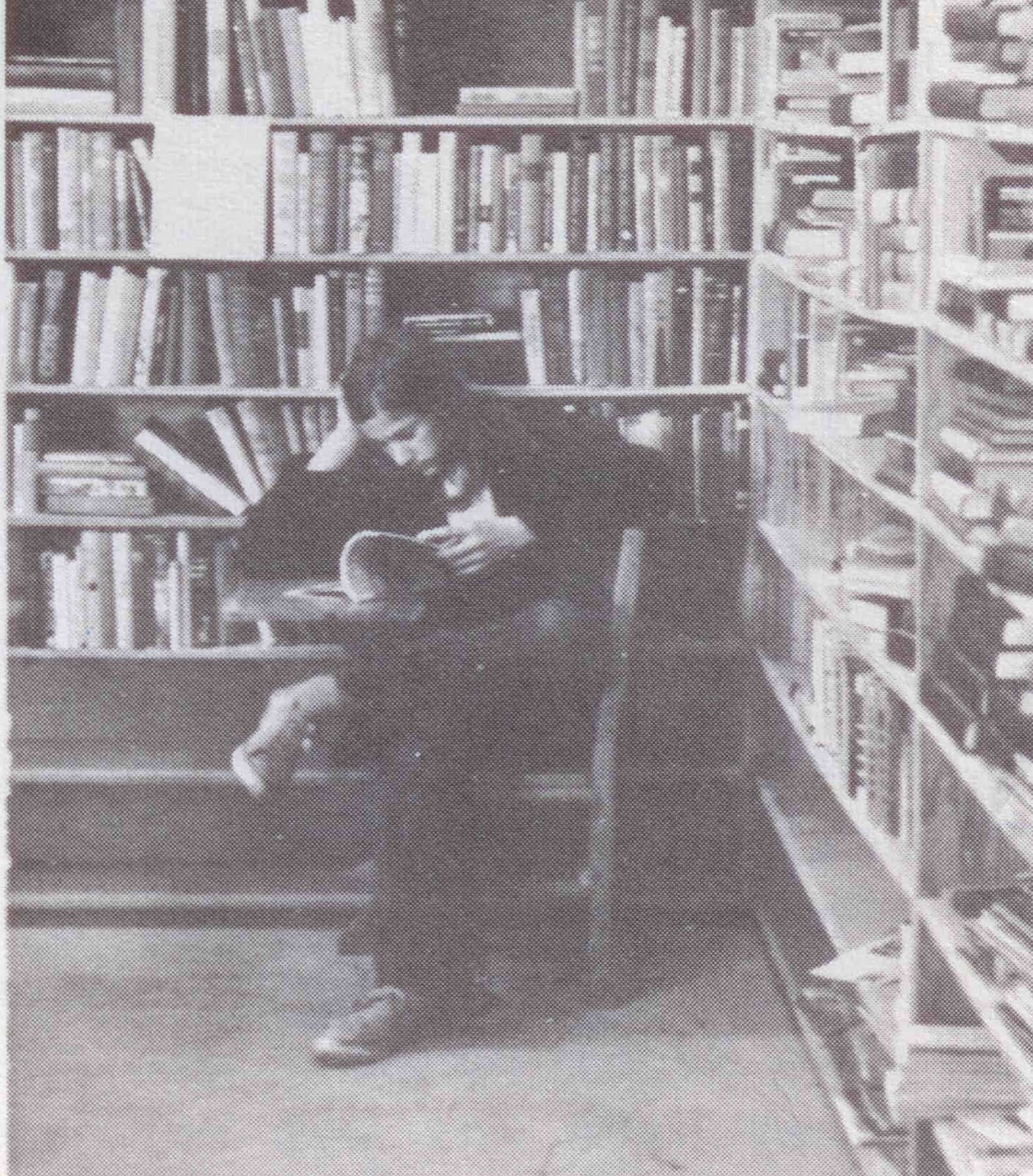
I don’t know when I first started hearing, or reading, about “Red Chuck” (actual name, Jean Million). He’d show up on the chuckberry.com message board from time to time. I made “friends” with him on myspace but never heard from him. Then more and more I’d see him perking up on facebook, posting youtube videos or philosophical French moans of anguish. He’s got a cat named Chuck, and was looking, for a time, for a dog named Bo. Don’t know if that happened. I know that he’s got a serious fixation on the bass playing of Jimmy Marsala.
I know he can do splits well enough to get a serious health warning from CBII. And that he covets his neighbor's jacket and guitar! (Understandable.)
And I know that once he got to play with Jimmy and CBII. You can read about it here, and see a clip, too.
What fascinates me is that this fellow in France saw Chuck Berry for the first time live 33 years after I did—but the same thing happened to both of us. And to so many of YOU. That's the power of our hero.
Of course, Jean's gone beyond what many or most of us have done. He not only got on stage with the band, he saw a 79 year old Chuck Berry playing on his back!! And he got his arm signed!
Anyway, enjoy.
I’ve seen video of you playing at the sound check with Chuck Berry’s band. Tell us how that came about, and how it felt.
Gee... there's no words to describe how it feels actually. You know, as a die-hard Chuck Berry fan, I know his band, and... Butch and Jimmy are heroes to me. Actually, we went to Amiens, where the show was, along with Peter from Sweden, and Jan from Germany. We were allowed to enter backstage, but it was quite early in the day-- and by the way, we entered before Chuck's band. The band then came on stage for the sound checks... and I hear this big and loud voice ... "Hey, Red, come on stage, come on!" .It was Butch's voice.
Gee... i remember approaching the stage, my legs were quiverin' and quackin'...
rest is memories...
(Except for video! Here's a short version.)
How and when did you become such a big Chuck Berry fan? Did it start with the records, or a live performance, or a film? Tell us about it.
Mmmh... really hard to say... My father was born back in 1949. And like people of his age he was more into The Beatles and The Rolling Stones stuff than Rock'n'Roll or Blues. I remember he had Chuck Berry's Golden Hits (French edition from 1967) on Mercury... That music really pleased me... but it's not really then I became a fan. I was listening to Chuck Berry like any other act actually... until I saw him on June, 30th 2004, in Vienne, France. I was in the first row, ... and I just can't explain what happened... I'm just addicted since then!
How many times have you seen him perform? Can you describe some of your favorite live moments?
I'll work it like this - give the dates I've been too, and write some comments after...
30/06/2004 - Vienne, France - Jazz à Vienne - the date that changed my life!
12/01/2005 - Villeurbanne, France - Transbordeur - the most powerful show I've been too... he was just crazy on this night - even played on his back ... Jim had his Precision on this tour... Gee, this bass just sounded perfect...
18/03/2005 - Beauvais, France - Blues Autour du Zinc - not so much things to say about that one.
10/11/2005 - Besançon, France - Micropolis - for that one too.
21/11/2007 - Lyon, France - Salle 3000 - Chuck was in my city - it's always something else. And because of Patrick Rocher, I met the band and Chuck at the hôtel, and since then, my After School Session cd is signed!
16/03/2008 - Paris, France - Olympia - special show - this one moved me - can't explain why.
17/03/2008 - Amsterdam, Holland - Heineken Music Hall - One of the best - gee, he had a strong playing - and it was obvious that Butch, Jim, Jean-Mi and Daniel were more and more good together - they really sounded like a band! and can't forget the photo session w/ Jimmy and Butch after... and I had a girl besides me... wanna find her again...
17/07/2008 - Sète, France - Théâtre de la Mer - incredible! it was in the summer, i get up about 5 am, and took the train along with my cat named Chuck (he was 2 months back then) - direction Sète... I let him at the hôtel, and attended the show (open-air show), I was able to hear the band rehearsing - they then left... Charles and Jimmy came to me ... "do you want to come with us backstage tonight?" - incredible... and Chuck was in a quite good shape! lovable..
14/11/2008 - Paris, France - Le Zénith - oh what a night !
15/11/2008 - Amiens, France - Le Zénith - enough said - i just jammed w/ the boys! man my life's complete ...
22/11/2008 - Mannheim, Germany - SAP Arena - Strong show... and what a moment: after the show I show my Chuck Berry tattoo to our man - he signed my arm - since then his autograph is under my skin, tattooed... tears were rollin' in both his eyes and mine...
Editor’s Note: Jean, they’re rollin’ down Doug’s now, too, I can almost assure you. There were a few more questions, but who’d ask them after that!
I first saw Chuck Berry in Sacramento on February 13, 1971. I’d heard about the concert that same day on the radio. I convinced two of my sisters to join me. We headed downtown, parked, and got to the ticket booth five minutes after the scheduled start of a three act show. I remember that it cost five dollars.
There was music coming through the auditorium doors.
“Has the show started?” we asked the lady in the booth. She was grumpy even though there was no one to bother her except us. The lobby was empty.
“He’s on stage now,” she said, counting our money.
“Who’s on stage? Chuck Berry’s on stage?”
“He started about five minutes ago.”
This was vaguely alarming news. The other acts were a local rock band called Slo Loris and a child singer named Little Deon. Chuck Berry was supposed to be on top, the headliner.
We pushed open the auditorium door and there he was, seemingly alone on stage, him and his guitar, at a mike stand, playing the blues.
I was transfixed. The room was nearly empty—a few hundred people in the front rows, and a few more along the side balconies. And Chuck Berry was there, tall, lean, jeans and an orange shirt, hair slicked back, eyes half closed, high cheekbones tilted at the mike, singing something sad and woeful. His guitar was a cherry red Gibson, and he bent the notes two or more at a time, loud and raw, thundering and blistering between his mournful, slightly scratchy voice.
You’re so unhappy
You always cry
The man you love
Treats you so unkind
When things go wrong
Go wrong with you
It hurts me too.
He pushed through another 45 minutes or so, getting the small crowd up on its feet for most of the show, playing hits I only sort of recognized that day—a song about Boston, Pittsburgh, PA, and the heart of Texas, a couple of “Beatles” songs about Rock and Roll Music and Beethoven rolling over. When Chuck was finally grinning he tried to get the local guitarist to solo and the guy just smiled humbly and plunked a single note. (He probably regrets that now.) Chuck laughed, but it didn’t matter. All he really needed was his guitar and a crowd. He finished with Johnny B. Goode, bowing as he backed off stage, still playing his guitar held upright in front of himself like a religious relic of some sort—and then he was gone, the band still rumbling away, and finally a story from the emcee that there’d been a mix up and Chuck Berry had to get to LA for another show. We watched the other acts for a few minutes, but it was all downhill after Chuck Berry. When Little Dion, perhaps ten years old, sang “It’s a Man’s World,” we left.
But I was infected and doomed. What I saw and heard had worked its way deep into my bones. God only knows why these things happen. There were 400 people in the auditorium. Most probably went home happy to have seen a good show. I went home changed.
(This looks like the Chuck Berry I saw that day, alone at the mike, only happier. Same jeans! Has to be about the same year.)
It was one of my first introductions to the blues. (The other was equally profound—a “young” B. B. King playing outdoors at the California State Fair. We considered both him and Chuck Berry—young men in their mid forties—to be “old” in those days.) Chuck Berry played many of his hits, I’m sure. I remember bits and pieces of then unfamiliar songs. But it was blues that I remembered—this great man, singing to an empty hall, his guitar blasting and bending like a car horn undergoing the dopler effect.
The next day I rode my bike to the local discount store (“Rasco Tempo a Division of Gamble Skogmo, Inc.”) (I’m not making that up) and found a black and gold double album—Chuck Berry’s Golden Decade—for $6 or $7. That day everything changed for me. I played it front to back three or four times. I couldn’t believe my fortune. One song after another—Maybelenne, Wee Wee Hours, Johnny B. Goode, and on and on, all seemingly perfect, with crackling lyrics, pounding drums and blazing guitar. The only ones I didn’t like so much were the few with backing vocals or too many horns. I liked it stripped down—drums, bass and guitar, and Berry’s own vocals. Maybe a saxophone in the background. Within a few weeks I had that record memorized—and before long I was chasing down the influences, like T-Bone Walker and Elmore James.
I’d only seen him twice before, on television, backed by television bands with dorky horn arrangements. My brother Stevo had told me about Chuck Berry, who was “better than Elvis.” The first time was on the Mike Douglas show, where, it seems, he was a regular guest. I watched him on a little black and white set, interested, not hooked.
Another time, maybe a few months later, I was woken up by music in the next room. My brothers were watching Dick Cavett or some other late night show, and there he was again, this time in color. I watched, not mesmerized, but something in that music must have woken me from deep sleep.
Stevo was worth listening to. He was a self taught drummer who played in a string of local Sacramento rock bands in the mid 1960s through the early 1970s. I never got to hear him on stage, but the entire neighborhood heard Stevo thumping hour after hour in his bedroom. My mom bought him a full set of blue, sparkling Pearls in an effort to keep him out of trouble. The set cost $849 back when $849 was about a cazillion. There were two tom toms on top, and beautiful chrome hardware. Stevo would let me sneak into his room to play them, and once his disreputable friend Dee taught me a simple boom-cha, boom-boom-cha beat. Dee was in the same bands as Stevo. They played in Battles of the Bands at our local shopping centers and at the Cottage Park youth center. Stevo’s group once opened for Sly and the Family Stone at a little rock hall at South Lake Tahoe (where I’d later see Chuck Berry and shake his hand). Stevo snuck on stage before a show and started pounding Sly’s drummer’s set—something Sly’s drummer didn’t appreciate. Stevo was good. And when he talked about rock and roll, or blues, (or any sort of pop culture,) he always seemed to have good, interesting thoughts. So when he said “better than Elvis,” I listened.
Not that I cared much about Elvis. I still have trouble caring about Elvis. I was too young to care about Elvis. By the time I was listening to music, Elvis was nearly done making it. This was before he went to Vegas, and at the tail end of a lame string of movies.
But I was curious about this guy who was supposed to be better, though less well known-- Chuck Berry.
For me, for reasons I don’t know, “Chuck” has always meant blond hair and freckles. So I imagined Chuck Berry as an angry sort, with a tall blond pompadour.
Then they announce him on Mike Douglas. I decide to watch. The TV is black and white. There are crazy daisies. And Chuck isn’t blond, or angry.
I watch but I am not changed in any way.
And then, maybe a year later, Stevo again, holding forth again on Chuck Berry after a trip to Winterland or the Filmore Auditorium in San Francisco.
Stevo is still inexplicable to me. He was short, stocky and Irish in a half Irish family where the men tended to be tall and (in our youth) lean. He was one of the first people in Sacramento to have long hair—always an inch or so longer than the Beatles. He got beat up for it. He was tough as nails. He walked home from a car crash on a badly broken foot. Another crash left a circular gash in his cheek. He drank too much. He honored my mom, but joked with my dad. As he got older they’d drink themselves into insanity and run amok inside our house. He went to jail frequently— all for stuff that wouldn’t get you in trouble now. A year or two before he died he became increasingly paranoid and irrational. I remember him punching me from behind, convinced I’d said something, which I hadn’t. He could also be incredibly sweet. He got me drunk once and let me sleep it off on his couch, and I heard him and his drunkard friend talking gently about me. Another time he listened to my tape of a blues type song about drinking and asked who it was. “That’s me,” I said. He feigned disbelief. “I’ll be your drummer,” he told me. I’d followed him into drumming, and had a beginner’s set of Ludwigs that he could have used. I was incredibly honored. But within a week or two Stevo was gone—killed by a passing car after a bouncer pushed him into the street.
He was, in some ways, a dummy. On a trip to Europe he evidently could not fathom that people in other countries spoke other languages. But he was a genius, too—a philosopher of pop culture, sports, and politics, all of which he understood in a deep, instinctual way.
The thing he understood better than anyone I knew was pop culture—and specifically music and old movies.
It doesn’t sound like much now, but in the 1960s it was unusual to hear a young, long haired rock and roll musician defending Frank Sinatra or Tony Bennett. I remember, vaguely, Stevo explaining that Jackie Gleason was a great actor. He talked about Sammy Davis Junior’s talent at a time when all I could see was the tap dancing friend of Richard Nixon. Thundering south at night on Interstate 5 or Highway 99 Stevo held forth on song after song on some 50,000 watt rock and roll radio show.
We are all dummies. We’re not all as smart as Stevo.
“You know, he’s not really a bluesman.” He was describing a show he’d seen in San Francisco. “I mean, there are the real blues guys—Muddy Waters, B. B. King, Bobby Bland-- and he’s not one of them. But he comes from that tradition. I bet that’s how he started—playing blues and standards in little clubs. And at this show he played nothing but the blues, and it worked. I mean, he’s not really a bluesman, but he knows that music.”
I was probably 14 years old. I didn’t really know what a “bluesman” was, but I was listening, storing away this information from a good authority.
(Stevo's genius was confirmed by Chuck Berry himself, who told the Brittish newspaper The Independent: "My music, it is very simple stuff. I wanted to play blues. But I wasn't blue enough. I wasn't like Muddy Waters, people who really had it hard. In our house, we had food on the table. So I concentrated on this fun and frolic." For the full interview, see below.)
And then I hear the announcement. Chuck Berry, tonight, at the Memorial Auditorium.
The Sacramento Memorial Auditorium reeks of old rock and roll shows. It was built in 1927 of brick and ceramic tile. The stage is wrapped in gold. It’s essentially a barn, used for all the big events of small town life—boxing, wrestling, opera, graduations-- but has seen dozens of rock and roll legends. My sisters and brothers saw James Brown there in the middle 1960s. Also the Rolling Stones on their first tour through Sacramento. Chuck Berry played there throughout his heyday in the 50s, and came back several times in the 70s, either alone, or with the Rock and Roll Revival. I saw my first Rock and Roll concert there—Sonny and Cher, with backup bands that included The New Breed and a group of kids in wig hats called The Golliwogs. They later became Credence Clearwater Revival.
And I saw Chuck Berry there, sad and lonely looking, singing the blues to a crowd of three or four hundred people. I don’t remember many of the songs he played. I didn’t know them then. I don’t really remember the details.
But what I do remember is being mesmerized by the sight and sound of this lone and lonesome looking gunslinger of a man, “Better than Elvis,” singing blues and joyful rock and roll and blistering us with his red Gibson guitar before taking off for some more rewarding show in another town.
The next day, I bought one of his records. And everything changed.
# # #
Flash forward 30 years. In the interim I have seen Chuck Berry 6 times. I’ve purchased just about all of his records and compilations. I’ve searched out all the interviews. I’ve read his autobiography. I’ve let him go now and then, only to return.
I’m a single dad and lawyer, raising kids and trying cases, too pooped to pop, to old to stroll, a life of monkey business.
It’s May of 2001. I open the newspaper and see in a small advertisement or article that Chuck Berry will fill in for an ailing Jerry Lee Lewis at the EMP in Seattle. It’s a last minute change. He’s playing that night!
The spark is reignited. I get tickets for myself and my two little girls. This will be the second of three “last time I see Chuck Berry” concerts that I’ve attended so far. He just keeps going.
The EMP is a rock and roll museum built by Mercer Island billionaire Paul Allen. The building itself was designed by Frank Gehry. It’s not his best work, but perhaps only because of its location in the colorful civic jumble of Seattle Center. The building is all curves and colors, inspired by the painted bodies of solid body electric guitars. It would have looked good set in the middle of Seattle staid downtown but it’s lost in the chaos of the Center. And there is something fundamentally wrong about putting rock and roll (or any form of music) into a museum. It belongs in garages, clubs and guilded civic centers.
But this day I learn that the EMP has a “club”— a great little music hall called the Sky Church where real music can come alive.
We get there early and see a black town car leaving the EMP’s underground garage. The driver’s got a captain’s hat, and he’s leaning forward trying to figure out which way to go. “That’s Chuck Berry!” I tell my kids. The girls shriek (they’re properly indoctrinated) and we lurch towards the car, but no chance-- Chuck is determined to get somewhere. Anyway, what the heck would I say?
He’s with another man who through darkened glass looks to me to be almost as old as Chuck himself ( who is close to 75 that day). I wonder who it could be. Some old friend helping him do what he used to do alone—pack a toothbrush and a guitar and head out to one of the hundreds of one-nighters he’s done over the past half century. The car scoots away. We watch. I’m half way thinking how I can follow it. I’m guessing that Somewhere in Seattle, some restaurant is about to be visited by great Chuck Berry. I try to imagine being in that place when the two walk in.
There is a scene in the movie “Chuck Berry- Hail! Hail! Rock ‘n’ Roll” where Chuck Berry walks through an airport in his red sports coat and bolo tie, carrying his guitar, talking about how each one lasts six months (“Deductible, you know? Tools!”). Heads turn. There are little waves and moments of recognition. Once on board the plane the flight attendants ask for and receive a tight lipped kiss. (The guy next to him just seems to wonder what the fuss is about.)
It’s fascinating to me: a landmark of history and culture who walks among us, doing ordinary (and sometimes pretty extraordinary) things.
Guitarist Joe Perry described meeting him in an airport. “I was walking through the airport, and someone said, ‘It's Chuck Berry over there.’ Well, I had to go over and shake his hand. But he was tongue-tied. Then he was gone.”
I’ve seen him after a show in a Cadillac convertible, towel around his neck, young blond at his side, waving a quick goodbye and then taking off through the crowd. “Hey Chuck!” He must hear it all day, every day.
But we can’t follow the Town Car today. We have tickets. The show starts in an hour. We want good spots. We get inside and set anchor near the stage. My younger daughter is only tall enough to see people’s butts, so she spends most of her time on my shoulders or in my arms. It’s a small room, wider than it is deep. Everyone within sight is a fanatic. They’re talking about shows they’ve seen and are reciting various bits of urban legend. “He’s paid in cash before the show.” “Different band every night.” I can’t even respond to this because I figure I am the biggest fan there. That’s just the way it is. I know more than all of them put together. (You can tell me about a lot of things, but you probably can’t tell me much about Chuck Berry, or General Motors Trucks, model years 1973-1986. Those subjects are mine.)
When it’s finally time for the show Chuck comes out in a captain’s cap, a glittering shirt and a grumpy mood. Call it foul. The first thing he does when he gets on stage is pull all the plugs from his amp and guitar. A cool 22 year old is sent out to get the wires right while Chuck taps a very large foot. This, we agree in my section of the audience, is pressure. The kid does it though, and the fanatics all mumble knowingly about the contract. The second thing Chuck does is kick a dumbstruck guitarist from stage before the band plays a single note. “It’s in the contract,” he says. “Drums, bass and piano. That’s it.” I feel terrible for the guitarist. He didn’t write the contract—he’s just a victim of it. The band is actually a good fit—a bunch of old rockers and artists who’ve played together for decades, but Chuck’s evidently in no mood. He reduces the bass player to three notes and a set rhythm: “ba-bump, ba-bump, ba-bump, ba-bump” and it stays that way for the rest of the night; he plays a good chunk of the show without accompaniment—silly songs like South of the Border and My Ding a Ling; and when he gets to Wee Wee Hours, the grown up flip side to “Maybellene,” he instructs the pianist on just how to play it, sliding the chords up from E to G, and then from A to C.
This isn’t the Chuck Berry I remember but that’s okay—it’s an interesting Chuck Berry. And he’s playing his first song—the one he originally brought to Chess Records, the one that came in second to Maybelenne. I’m doing my best to absorb the moment and the music lesson.
In the wee wee hours
That’s when I think of you.
In the wee wee hours
That’s when I think of you.
You say, but yet I wonder,
If your love was ever true.
In 7 prior concerts I’d never seen Chuck Berry play it. A suitably sad and nostalgic song for a night that felt a little different. I mouth the words as he sings.
In a wee little room
I sit alone and think of you
In a wee little room
I sit alone and think of you
And wonder if you still remember
All the things we used to do.
At some point during the song Chuck Berry looks down at me with tired eyes, sees I’m mouthing the words, watches me, then says: “You’re remembering somebody, aren’t you?”
Actually, no. Mainly I’m trying to absorb the music lesson and the moment. But I’m pleased he’s singled me out—that he’s noticed me in a crowd.
We’ve met before. I shook his hand while he sat near the stage at Lake Tahoe, smoking a cigarette and talking with someone. I was about 15. I blurted: “You’re my idol!”
A few years later I passed him a note suggesting that he play one of his newer songs. He laughed and shook his head.
And a dozen years before the EMP show I’d seen him at Seattle’s Paramount Theater. This time he didn’t notice me, but he did notice the mother of the two little girls I took to the EMP show. We were in the front row. It was my first “last time I see Chuck Berry” concert. My ex wife is African, and was a rare black face in a sea of lighter ones. Chuck noticed her in the front row, lit up, and did a little back and fourth dance for her during another blues number.
It’s a conversation of non-sequiturs that takes place one line every decade or so.
When Chuck plays “My Ding-a-Ling” I’ve got my seven year old on my shoulders, a few feet from his knees. She listens a while, then blurts: “He’s singing about his penis!” Even this doesn’t get a smile out of him on this crabby evening.
He’s grumpy. I never saw it during a show until this particular day, 40 or 50 years into his professional music career—but I heard the stories. Cash in a bag before going on stage. Playing out of tune. Carl Perkins, who toured England with Berry in 1964 said that Chuck turned cold after his early 19602 prison sentence on trumped up charges of violating the Mann Act. (The judge was a racist fool who slept during the trial. Berry writes about it in his autobiography.) Chuck kicked one sympathetic writer out of Berry Park in the late 1960s. He argued with Keith Richards during the filming of “Hail! Hail! Rock ‘n’ Roll.” (Chuck was right, though.)
I remember talking with my brother-in-law, a smart man knowledgeable about music, who said: “He doesn’t give a shit. He doesn’t care anymore. Don’t get me wrong-- he was great. But he should quit. He doesn’t even tune his guitar!”
It’s a sentiment I’ve heard and read a lot. Keith Richards says it in Chuck Berry- Hail! Hail! Rock ‘n’ Roll. As for the guitar—there’s a funny story posted somewhere about the musicians in his current band distracting him before a show while another sneaks off to snatch and tune the untouchable Gibson.
And maybe they’re all right—maybe he doesn’t care.
But he keeps doing it— playing for people, playing songs they need to hear, working them into at least a small frenzy before he lets go and heads back to the car.
At the EMP he doesn’t seem to care much about anything except the contract-- until, like magic, he perks up, the songs take life and flight, and the notes start flowing. He’s like a surfer who has suddenly caught the big wave. The guitar strings snap, the old licks come alive, he’s grinning, he’s crackling, he laughs and makes faces. The crowd goes crazy, jumping and screaming for this 74 year old in a captain’s hat, inventor of rock guitar and rock poetry, grumpy genius, occasional felon, and father of us all. It don’t take or last but a few minutes, but it’s good while it lasts.
And then, before we know it it’s Johnny B. Goode, the guitar notes as full throated and loud as the horn on an old Ford as he backs off stage, bowing, still playing, driving us wild with an energy and sound that hasn’t faded at all in 40 years, doing it better at 74 than the younger folk on stage, and ready to disappear into the night with his old man companion, his towel, and the black Town Car.
Because of this blog, and a Sacramento Archivist, I know that it was 40 years ago this evening that I first saw Chuck Berry. Only close, longtime friends and family can know what a life changing event this was for me. It would have been easy not to have gone-- and then who knows if it ever would have clicked in quite the same way?
Part of the room where I first heard
Chuck Berry's Golden Decade
As I’ve worked on this blog, I’ve written a lot about my own experience as a Chuck Berry fan, and I’ve struggled to recreate some of that history. I don’t know why it is so important to me, but it is. For whatever reason, the man had a huge impact on me.
I “discovered” him as a young teenager. I’ve always remembered the broad outlines of that personal history. I remember first hearing about him from my brother Stevo. I remember first seeing him on a Mike Douglas show. I remember seeing him again on the Dick Cavett show. I remember that neither of those television performances turned me into a Chuck Berry fan—but I find it interesting that I remember them nearly 40 years later.
Then, of course, I remember seeing him for the first time at sad sort of show at the Sacramento Memorial Auditorium. I wrote about it (with some innacuracies) HERE. I was mesmerized, and the next day I went out and bought the original "Golden Decade" album. I was changed forever.
But whatever I wrote was done from memory—memory faded by 40 years of experience (and gently rinsed by 35 years of beer and wine).
Part of the mystery is that I probably remember more of my crucial Chuck Berry memories than other things arguably far more important. I remember those television shows. I remember other Mike Douglas Show appearances. I remember that first concert, and the second, at South Lake Tahoe. I remember hearing that first Golden Decade album and playing it again and again in the empty tower room of an old Victorian farmhouse that we lived in at the time. I remember going crazy with those songs, singing them as loud as I could with my awful singing voice. I remember soon after when I went to the suburban Sacramento Tower Records and found “Back Home,” and my delight in hearing a modernized but thrilling new version of Chuck Berry music. (Tonight the harmonica player on “Back Home,” boogie-woogie piano player Robert “Boogie Bob” Baldori is reportedly participating in the Blueberry Hill show in St. Louis. They are probably just finishing as I write this. I wish I were there!) I remember months later finding “San Francisco Dues” at that same branch of Tower (and finding an album by T-Bone Walker, that I still play from time to time, at the same store.) I remember seeing Chuck Berry a third and fourth time at “Rock and Roll Revival” shows at the Memorial Auditorium. Each time he ended the show with a rousing finale. Only Bo Diddley even came close.
I could go on and on, because by the time I was 16 there was a sudden burst of renewed interest in Chuck Berry. He had his first number one hit, and suddenly he was everywhere. I remember him on “In Concert,” and “The Midnight Special.” I remember a show where he played live on television with Bo Diddley. I remember when “Bio” came out, and then, seeing one last great Chuck Berry show at Monterey, California, where he played for hours and then disappeared into the sunshine in his rental car (or maybe just his own Cadillac for the relatively short drive to Los Angeles town).
As I say, I could go on and on.
Now, recently the magic of the blog has begun to pay off. One day I was googling for news stories and found a “Tahoe Tribune” story about the South Lake Tahoe concert that I saw at an old Safeway store turned rock hall. Suddenly I had a date for that show: July 4, 1971.
I don’t know if I believe it was July 4. I have no memory of the holiday, or fireworks. But July 1971 fits perfectly with my memory-- and let's give the Tahoe Tribune credit for journalistic accuracy.
I would have been 15 years old. I forget how I got to Tahoe, where my older brother was living, but I remember that a girl from my school met me there with her girlfriend and we went to the show, went crazy, and left, exhausted, before the second set was even done.
(Don’t tell my mother that Lara went to the cabin. She found her in my room once—and believe me, we were just talking—and threw a fit.)
But I was still missing information about the first show. So I decided to try to figure out when it was.
I had tried looking at microfilms at the Sacramento library. But without a date, that was a haystack.
A few weeks later I e-mailed the Sacramento Convention Center and asked if they had information.
And guess what? They didn’t. But a very nice man there told me who might. He told me the name of a researcher at the Sacramento Archives. (He also sent me a very, very cool poster.)
It took me a few weeks to call the archives. (I actually do have a job and work to do.) I asked for the archivist and told her what the man at the Convention Center told me—that she knew everything.
He was right.
Less than 24 hours after I called, she sent me an e-mail telling me that the first Chuck Berry concert I saw in person happened on February 13, 1971. And she confirmed something else I knew—that only 800 people attended.
Dear Peter:
I did find that Chuck Berry played Memorial Auditorium on February 13, 1971. Also on November 24th 1971 there was a “50s Rock & Roll Revival” but the listing doesn’t mention who played. I can also tell you that 800 people attended the Berry concert and over 4,000 attended the rock & roll revival.
Things were starting to fall into place. Another bit of magic from the blog is that I was encouraged to buy a couple of Morten Reff’s books. One of them gave me tantalizing tidbits—dates of television shows. Now, with these dates from the archives and Tahoe, they make perfect sense to me.
Chuck Berry was on the Mike Douglas show on October 22, 1970-- four months before I'd finally see him live. I can say with nearly absolute confidence that I first saw Chuck Berry on that episode of Mike Douglas. (I was expecting a blond version of Elvis!) All I can say is that I found him very interesting, and that I’ve never forgotten the experience. I was 14. Here is that show. (They made him perform in some awkard situations in those days.)
Two months later Chuck Berry was on Dick Cavett. I remember being asleep in bed in my room next to the television room. Something woke me. I went out, groggy, and watched with my brothers Stevo and Danny. No real connection yet, but again, I’ve never forgotten. (I didn’t know it at the time, but according to Reff’s book, that was the first time I ever heard the song “Tulane!” Oh, if someone has the tape I want it!)
Then, two months after that, the show in Sacramento. (This isn't it, but this is what he looked like-- and the only time I saw him in Jeans. I'm thinking this must be from "The Music Scene" hosted by David Steinberg. It makes me wonder. I used to watch that show. It played December 22, 1969.) (Did they always make him play on raised platforms?)
And the next day, love! I bought the album Golden Decade. I played it straight through over and over in the empty upstairs room where I kept my drumset. (I still have that drumset! It's vintage now.) So pieces of my history are starting to fall in place.
In a wee little room...
It had to be Valentine’s Day, 1971. Start of a lifelong love of Chuck Berry’s music and the blues.
Part of why I was so profoundly touched by Chuck Berry is probably that accident of time: the accident of finding him just as I was becoming my own, independent self. (Except for the 1970-1971 yearbook photo at the bottom, the pictures on this page were taken about that same exact time, with an Exa IIA reflex camera that I bought mail order from the back of a magazine for $30. I had a little darkroom in my closet. I recently found the negatives and had them printed because they contained photographs of a couple of high school events and we had a reunion last year. The art photography career didn’t pan out, but the camera, though broken, is in my drawer.)
But I noted with interest recently that I found him about the time my own father died. Now I realize it was just one month prior to my father’s death. I’m sure that played a role, too.
And in his old age I’ve come to realize that as an adopted father figure he probably wasn’t such a crazy choice. I see him on stage with his son and daughter and grandson. I hear that he calls Jimmy Marsala and Robert Lohr his other “sons.” I see him in “Hail! Hail!” with his own dad and his other family members. I see him in Rolling Stone with his wife of 61 years. All rumor and story and silliness aside, you could do worse finding a father figure.
At any rate, writing about him, and searching for these bits of personal history is helping me make sense of faded memories.
Sunday evening will make it 40 years since I first walked into the Memorial Auditorium in Sacramento to see Chuck Berry perform live. That evening we'll have some old friends over to meet the newest member of the family, granddaughter Leila Tulane. I'll never forget that night 40 years ago, or the morning 39.8 years later when my little Tulane was born. And both events changed my life forever! (Funny thing about Tulane. Before I saw Chuck Berry live, I saw him twice on television. The second time was on Dick Cavett. And guess what he played that night? According to Morten Reff, it was "Tulane!" I'm telling you, these events infiltrate my consciousness and change things!)
Ah well, you probably can't, and I definitely can't. But with the internet, all things are at least THEORETICALLY possible. And the two samples provided by Daniel Glass on this Drummerworld website give a really interesting nutshell lesson on how to play the Odie Payne doubleshuffle to Chuck Berry's "No Particular Place to Go." Even if you can't or don't play drums (I can't but do) you should take a listen. You'll hear more next time you play the song itself.
Now-- warn the neighbors! I'm heading to my basement!
This is making sense to me now--- it's a companion to the great one with T-Bone. (I've got it filed away as "video of the month." Really video of the century.) And check out the ruby, white and blue slippers!
A couple of newspaper stories about getting arrested on charges of rocking while black back in the fifties. I remember reading about the Mississippi incident in Chuck Berry's autobiography but didn't know it was a national story. Here is an original newspaper account. (If the tone sounds remarkably fair for a story from 1959, note the source.) Read it HERE.
Here is a more "mainstream" version, with all ethnicities carefully observed and recorded.
Another story from the Afro American, this one about getting arrested on charges of changing a tire in the presence of a white woman: Read it HERE. Fortunately this one, at least, led to an acquittal.
What's amazing is how persistent it was. Remember the drunk Keith Richards telling about getting punched in "Hail! Hail! Rock and Roll?" Remember his comments, and his disapproving sneer? No wonder he got his clock cleaned.
But Chuck Berry persevered through all this, and did his part to help change the world. Thank you. We're not there yet, but maybe someday.
It’s pretty remarkable to me to think that it was 40 years ago that I went to my first Chuck Berry show. I wish I could go back and see it again! And all of the others that I was lucky to attend.
I’ve written about that first show plenty of times. I only know the exact date (February 13, 1971) because of an amazingly helpful public employee in Sacramento-- a city archivist.
By blogging for a couple of years (that anniversary is also approaching), searching the internet, and looking at books like Morten Reff’s “Directory” I’ve been able to reconstruct bits of my personal memory and build a chronology of my Chuck Berry addiction. The first two exposures, in October and December of 1970, were on television. They didn’t get me hooked, but for reasons I can hardly fathom they remained in my fading memory banks ever since. Then the first live show in February, and then two more in July and November of 1971. (There was another one stuck in there right about that time, but even the archivist couldn’t find it. It was a Richard Nader Rock and Roll Revival-- one of two I attended in a matter of months. Maybe the whole show was kept off the books!)
That was a lot of really good Chuck Berry in a short amount of time. And then, of course, the splendid Mike Douglas show with John Lennon (total validation), the movie “Let the Good Times roll,” and finally the huge success of The London Sessions (more validation.) And then he was everywhere-- on shows like “In Concert,” and “Don Kirshner’s Rock Concert,” and the “Midnight Special.” The only one I didn’t see at the time was his appearance on “Soul Train,” which I now find to be one of the most special.
It’s cool that so many of those performances are now on youtube. If Chuck were Bob I’d even be able to get recordings of all those shows I saw. There’s an incredible web of people recording and sharing every Bob Dylan concert. Someone even gave me a copy of one I saw in 1978. Pretty neat to hear it again. I'd love to hear the early Chuck Berry shows that I attended with my more expert ears and see how good they really were. (I think some of them were pretty danged good!)
That won't happen--but tidbits of history remain. So if anyone wants to give me a 40th anniversary gift, (a sentiment I recommend!) I know what I want. I have a hankering to see the television special he did with Bo Diddley and Ingrid and her band on ABC. I only saw it once, laying on my stomach in a room crowded with in-laws. At the time I loved it-- especially a segment with Bo and Chuck together that I recall as just as sweet as the wonderful scene in “Let the Good Times Roll.”
Later day reviews of the show, including Chuck’s own review in his Autobiography, suggest that it wasn’t his best performance. Oh well-- at least one person is sure to enjoy it.
I read somewhere recently where CBII said that Chuck Berry is a big fan of the Louvin Brothers. Charlie Louvin died January 26 at the age of 83. He performed at The Tractor Tavern a few years ago and I remember considering getting over there, but I didn't. Just goes to show. Anyway, no real surprise that Chuck is a fan. It's hard to listen to this one without thinking of Chuck Berry's harmonies on the song "Rain Eyes."
Bob Lohr posted the interview on facebook. I stole it.
JW: Chuck Berry has a reputation for being difficult. Was that your impression of him?
MC: I met a lot of eccentric people working at Chess but Chuck was by far the most extreme in that sense. He has lived life by his own rules and doesn’t really care about other people’s rules. In a way you have to respect that. But it’s hard to deal with at times. He’s a true outlaw and laid the foundations for that rock’n’roll lifestyle. He went to jail for a second time in 1979 because he refused to pay his taxes. He could have paid up and avoided prison. But he didn’t care. I didn’t personally have any problems with him. It helped that I didn’t have to deal with the business end of his career.
Me and Chuck go back a long way. I was thirteen when he signed to Chess, having been recommended by Muddy Waters. He’d stop over at our house. He’d sleep in my bedroom. I used to take him out for breakfast and he’d always amaze me by ordering a strawberry shortcake as a starter. Chuck did everything differently to other people. Mostly we talked about cars and girls. He especially loved girls. He had one of the world’s first Polaroid cameras and had hundreds of pictures of beautiful girls. He was a creative guy. A poet. A genuine artist. He was a great musician and an inspired lyricist. He really understood the psychology of white teenagers. The teenage revolution began in 1955. Suddenly kids were driving around in flash cars, going to drive-in movies, drive-in hamburger joints. This was a whole new crazy cultural shift in America. It wasn’t happening in the black population but Chuck instinctively understood what was happening with the white kids and he captured that entire upheaval in his songs.
Chuck revolutionised the fortunes of Chess Records. From 1950 to 1955 we’d had blues hits. But even a number one record on the blues chart sold no more than 20,000. Then we signed Chuck Berry and Bo Diddley. Suddenly it all changed. I met Chuck recently in New York, hadn’t seen him in twelve years. I was telling him about the time in 1955 when my dad was driving through Chicago and we heard Maybellene being played for the first time on the biggest white radio station. My dad was so happy at that moment because he knew he’d got his first crossover hit. Life was different for us after that. We’d always been poor. Any profits from Chess were ploughed back into the label. My mother didn’t have a dollar to buy me a water pistol when all the other kids in the neighbourhood had them. As soon as Chess were having hits on the pop chart, my parents got lavish in terms of buying stuff for their kids. I was telling Chuck all this and saying that he’d radically changed my life. He said, “It wasn’t one-way traffic, Marshall. You guys made my life great. I couldn’t have gone anywhere without Chess Records.” That was an emotional meeting for me. I think it was emotional for Chuck too.
Thank Bob Lohr for the entire succession of links I've just put up-- and for this wonderful review of the show from St. Louis's Riverfront Times. And thank Ida May for the photograph (taken by an unknown photographer I also thank!) According to Lohr: "The show was cool and Chuck played well. Chuck said earlier that he was getting tired of people calling him and asking him how he was feeling...LOL..."enough is enough!!!" he said."
Today a brown package arrived from distant lands with local sounds from distant times-- an 80 minute Chuck Berry show at the Seattle Bumpershoot arts and music festival from September 1980. I missed it. I wasn't in Seattle in September 1980-- I was somewhere between Sokode and Kougnohou, Togo when this show took place-- but I'd heard about it in the local press from time to time. It was rumoured to be a good one. And guess what? It was.
And so is this recording-- so clear it sounds like it came straight through the soundboard.
Which makes me think someone was naughty!
The recording is almost all vocal, guitars and bass, with just enough drums a few (mercifully) short keyboard solos. I read somewhere that Chuck kicked Heart's bass player off stage at this show. If true, I'm betting that it was because Jimmy Marsala travelled with Chuck to do this show.
There are 16 1/2 songs ("Reelin' and Rockin'" becomes "House Lights" at times) including most of the big ones, plus "Bio" and a good version of "Promised Land."
Once upon a time I was able to find pictures from that show on line, but this time I came up blank. I'll keep looking. And listening.
Jan (or John-- our other J.J.) posted this on facebook. What a treat to hear Johnnie Johnson without all the other instruments. And a double treat when they switch sides and you hear him attack the lower keys. Danke, Jan!
I love when old theaters get used. Here's an interesting story about The Congress Theater in Chicago where Chuck Berry had such a rough time. The theater is a year older than Chuck and is working as hard as he is. Read about it HERE.
Of course, Blueberry Hill is in an old building, too-- but it's in much nicer shape. And Chuck plans to do his January show there next Wednesday. I'd like to see that one. Read about it HERE.
Don’t tell my wife. She and I have a much shorter history. I’m talking about the fortieth anniversary of my first Chuck Berry show—which was about 20 years after Chuck Berry’s first Chuck Berry show.
In those days people already thought he was an old guy.
He was 44! He’d been a star (a variable star) for about 15 years. Even though they were nearly brand new, I purchased the albums “Back Home” and “San Francisco Dues” in the Oldies section.
But he was “old,” and he called us all his children.
Flash forward 40 years. He’s still an old guy—just an old guy who’s in better shape than his “children.”
I’m not talking about his real children, of course. They benefit from the same genes that have their parents getting ready for a 70th anniversary sometime not to far from now.
I'm talking about the kids like me, who've got the rolling arthritis big time, and maybe an extra chin or two.
But even though he’s in good shape we can see that time marches on. He began his 70th year in show business by collapsing with exhaustion after attempting three shows and who knows how many flights in two cities in 24 hours. And he still insisted on “scooting” off stage.
Bob Dylan called him a “force of nature.”
I remember finding my own 80 something mom on a step ladder changing the lights at her house. Her bones were like eggshell but her will was like iron.
I’ve said before that I adopted Chuck Berry as a sort of spiritual father soon after I first saw him. It was only last year that I was able to put the timetable together and see that my first Chuck Berry show came about three weeks before my father died. So it all makes sense now.
And I don’t think I’m the only one who’s done something like that. When the young Chuck Berry walked back and forth across the stage feigning surprise at an ovation and hollering “all my children!” at the screaming hordes a lot of us accepted the gift. He’s the Father of rock and roll.
And his fans are younger. If he’d been strictly a blues musician he would have attracted fans his own age. That’s undoubtedly who came to the Cosmopolitan and the Crank Club. And his first few recording sessions didn’t really tip the scale one way or another. But as his recording career progressed he began singing more and more about and for the kids who came to his shows.
(By the time I found him he was singing to grown ups again—at least on records. I always thought “Lonely School Days” sounded a little funny on “San Francisco Dues.” Turns out it was an old recording of an old song.)
When he had trouble a few weeks ago in Chicago my little blog felt the uptick in googling about his condition. People were worried.
We’re all caught in a funny place. We want to keep seeing and applauding the man we love, and we want him to slow down and take care of himself. I posted a vision about a Chuck Berry show that included a chair on stage, lots of stories and poems, and maybe a few ballads or blues numbers. A friend just pointed out that this is what B. B. King’s doing these days.
But what makes Chuck Berry great is that he’ll do it his way and always has.
He started his career with an argument over lip-synching. He didn’t want to do it. And he’s kept it real ever since. Raggedy at times-- but real.
And 40 years after I first saw him he’s gearing up for his regular Wednesday night gig at Blueberry Hill.
Chuck coaxes his son into doing the "scoot" in this clip from April of last year. Thanks to Jean Million for posting this on on facebook-- I'd never seen it, and it's a lot of fun.
This is what it looks like when you're sitting up front at Blueberry Hill. What's amazing, besides the clarity of the video, is the clarity of the sound mix. The guitar is clear as a bell, and when he lets Bob Lohr take over on the solo, so is that. Pretty nice.